Open spaces and play areas
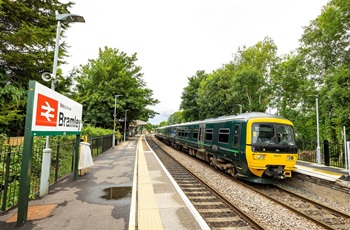
- Bramley
-
There are play areas in Bramley at:
- Farriers Close
- St. Marks Close
- Yew Tree Close
- Beckett Garden
- Leighton Close
- Bramley Green
- Cinder Track
- Bromelia Close
- Campbell Road
- Clift Meadow
- three play areas on German Road housing development.
There are several green areas including Forge Field at Farriers Close, Longbridge Road and Moat Close field.
- Mortimer West End
-
Has a recreation field, with playing fields with play area.
- Sherfield on Loddon
-
Has a community tennis court, playing field and play area.
- Silchester
-
Has a recreation ground including a play area, playing fields, a cricket pitch and pavilion.
The village also has Silchester Common, a site of special scientific interest that is one of the few remaining lowland heaths.
- Turgis Green
-
Has a playing field with cricket pavilion and play area.
Allotments
There are allotments located in:
- Bramley close to St James’ Church
- Sherfield on Loddon at Bow Gardens
- Silchester at Grays Meadow, Silchester Road and St James Park
Biodiversity
Our Natural Environment Team is involved in a range of work that protects and enhances the borough’s landscapes and habitats, such as developing strategic guidance including the Green Infrastructure Strategy, our Biodiversity Strategy and the emerging Tree Strategy
Read the Biodiversity Strategy
Within this ward there are:
- two Sites of Special Scientific Interest (SSSI)
- 94 Sites Important for Nature Conservation (SINC)
- one local nature reserve (LNR)
- 26 local green spaces (LGS)
- one road verge of ecological importance (RVEI)
- 76 ancient woodlands
- 1841 parcels of priority habitat, including floodplain grazing marsh, lowland meadows, lowland mixed deciduous woodland, lowland heathland, lowland dry acid grassland, wet woodland and wood pasture and parkland.
- Details about the types of sites
-
Site of Special Scientific Interest (SSI) - a nationally designated site valued for its biodiversity or geology.
Sites Important for Nature Conservation (SINCs) – locally designated sites of value for their biodiversity. They must be considered in any planning application.
Local Nature Reserves (LNR) – a national designation for biodiversity and public access. Local authorities declare them and generally own and manage them.
Local Green Spaces (LGS) – introduced in 2012 NPPF and provide the same level of protection as Green Belt to areas of green space that are particularly valued by their local communities.
Road Verges of Ecological Importance (RVEI) – identified by the Hampshire Biological Information Centre. The verges support either a notable species and/or a species rich semi-natural habitat.
Priority habitats – habitats of ‘principal importance’ listed within in the UK Biodiversity Action Plan (UK BAP) as required under Section 41 of the NERC Act 2006. Also known as ‘S41 habitats’.
The Wilder Bramley Facebook group are a community group dedicated to promoting and increasing biodiversity, sharing advice on being sustainable and discussing local environmental issues.
The Hampshire and Isle of Wight Wildlife Trust, with funding from the Environment Agency, have published a biodiversity strategy for the Loddon catchment area. The area includes parts of Hampshire, Berkshire and Surrey, including Basingstoke and Deane, Hart, Rushmoor and Wokingham.
Silchester Common is a site of Special Scientific Interest. It is managed by Silchester Parish Council with a working party of local volunteers.